
plush toy quality control is a practical sourcing question, not simply a product label. The most useful answer begins with the intended customer, the finished use case and the specific decisions that change cost, appearance, production control and delivery. This guide explains how buyers can move from a broad request to a reviewable brief without turning normal product development into vague promises.
Pufza works with custom plush projects from an 8,000 m² Shenzhen facility. That experience is relevant because a dependable order connects the approved sample, customer requirements, factory testing, production checkpoints, packing and shipment inspection. The exact solution will differ by project, but the decision framework below helps a buyer ask better questions before a quotation or production release.
1. The direct answer: how to approach plush toy quality control
Start with a clear, product-specific decision
The right approach is to evaluate the supplier’s actual control points, records and communication rather than relying on a quality claim alone. Begin with the finished product rather than a generic term: who will receive it, how it will be used, what must remain visually consistent and what market or delivery conditions apply. That focus makes the next supplier conversation more precise.
The related search language—plush toy quality inspection, stuffed animal quality control, plush toy stitching quality, plush toy durability, plush toy factory audit—often appears at different stages of the same purchase journey. It should not be used as a list of promises. Instead, use each term to identify a decision that must be shown in a sample, clarified in a quote or protected during bulk production.
A strong brief distinguishes confirmed requirements from choices that need testing. This gives a factory room to flag construction trade-offs early, while keeping the buyer’s non-negotiable character details, packaging requirements and destination-market preparation visible.
For a new project, ask for the assumption behind every recommendation. A transparent answer may identify an open material, a feature that needs a sample or a schedule dependency. That is more valuable than an early assurance that everything can be copied exactly from an image.
2. Build a buyer brief that a factory can act on
Use one controlled reference for design, commercial and quality decisions
A usable brief includes approved sample, materials, workmanship criteria, process checks, inspection plan, audit questions and corrective-action route. It also names the person who consolidates feedback and the target date by which each approval is needed. These details allow suppliers to distinguish a confirmed requirement from an estimate or a sample-stage question.
Add all relevant artwork views, reference photographs and a short description of the product application. Where appearance matters, identify the facial features, proportions, colour zones or accessories that carry the brand story. Where operations matter, identify the quantity range, packing format, destination and planned delivery window.
Avoid relying on descriptive words such as “premium,” “soft” or “eco” without a visible standard behind them. A supplier can work more effectively with a fabric direction, a swatch reference, a target finish, a defined claim or a customer requirement that needs documentation.
Keep the reference version-controlled. When an artwork, label or material changes, record the date, reason and approval. That simple habit reduces the chance that production, inspection and the buyer are all comparing different versions of the same product.
3. Use sampling to test the decisions that cannot be proven on screen
A physical sample turns an idea into inspectable evidence
The sample stage is where incoming material confirmation, first-piece review, in-process observations and packing checks create a practical visibility chain. A drawing or digital mock-up can communicate direction, but it cannot show the finished hand feel, seam behavior, filling balance, exact decoration result or pack-out performance.
Review the sample at normal viewing distance and in close detail. Photograph it from standard angles, compare it with the current artwork and record measurable comments for dimensions, placement or construction. Consolidated feedback is easier to act on than several unprioritized opinion lists.
Sample changes should be separated into visual, functional and compliance-preparation categories. A face adjustment may change the pattern or embroidery file; a packing adjustment may change carton volume; an accessory may require a different review path. The buyer should understand the practical effect before authorizing the revision.
When the sample is approved, create an approval pack: reference photographs, measurement points, material notes, decoration details, labels, packing instruction and any agreed tolerances. This is the bridge between creative approval and controlled production.
LET'S MAKE THE NEXT STEP CLEAR
Need a clearer brief before your next plush sample?
Send your artwork or product direction, target market, quantity and packaging needs. We will help identify the production decisions to confirm first.
Contact Us →4. Connect factory testing to the actual product risks
Preparation is more useful when it starts before bulk production
Factory testing should be connected to the finished construction rather than presented as a generic badge. Confirm which components, materials, attachments, labels, care expectations or special features need attention. The responsible market operator and qualified laboratory should determine applicable testing and documentation requirements for the specific product and market.
The factory can support preparation by confirming received materials against approved references, reviewing the first production piece and recording agreed in-process observations. These records help the team detect a shift in fabric, decoration, filling, attachment or packing before it becomes a shipment-scale issue.
Do not treat internal checks as a substitute for formal compliance assessment or third-party testing where that is required. Their value is production control: they create a traceable link between the approved sample, the bulk line and the finished-goods review.
If a product changes after a test sample or approval has been issued, evaluate the change deliberately. A new material, component, age grade, label or construction route may alter the information a buyer, laboratory or retailer needs to review.
5. Plan production checkpoints before the line begins
Quality is easier to manage when the reference is visible
In production, define critical appearance points and acceptable variation before the shipment inspection window opens. Confirm what will be checked at material receipt, first-piece review, in-process observation, finishing and packing. A useful checkpoint says what reference is used, who reviews it and what happens if an item does not match.
The first bulk piece is an important practical gate. It tests whether sample decisions have reached the production process: panel orientation, embroidery position, fill, trim attachment, labels and packing setup. Correcting an issue here is generally simpler than sorting it once a full lot is finished.
During production, ask for concise updates tied to decisions—not an unlabelled photo stream. For example, an update can show a material comparison, a first-piece review, a changed label proof or a packing test with the requested buyer decision stated clearly.
For repeat orders, retain the approved sample pack and inspection notes. They help preserve what worked, identify changes between runs and make internal handovers more reliable when the buyer’s team or the factory line changes.
6. Recognize the decisions that most often create avoidable rework
Make trade-offs visible while there is still time to act
A common risk is judging a factory only by a showroom, broad audit statement or lowest quotation. The remedy is not more paperwork for its own sake; it is a shared reference that lets the buyer and factory see the same product decision at the same time.
Watch for late changes to artwork, fabric, components, label copy, packaging or market destination. Each can affect more than one workflow: material sourcing, pattern work, quotation, testing preparation, carton planning or booking. Ask the supplier to explain the effect before accepting a revised date or price.
Do not compare suppliers only by their fastest response or lowest headline price. Compare how each one identifies open assumptions, requests technical clarification, documents sample changes and defines the quality and shipping handover. Those practices shape the final outcome as much as a unit cost.
A risk register can remain simple: list the decision, owner, due date, current evidence and next action. This is especially useful for a remote buyer managing artwork, retailer requirements and multiple approvals across time zones.
7. Prepare packing and shipment inspection as part of the product
The delivered condition matters as much as the loose sample
Packing should protect the approved product while meeting the sales-channel and freight requirements. Review inner protection, labels, carton configuration, moisture considerations and presentation with the actual sample. A pack that looks efficient on paper may change shape, pile or customer experience after transport.
Before final packing, confirm the current artwork and packing instruction, quantity, carton marks, required documents and inspection timing. If independent inspection is part of the order, reserve access and a correction window early enough to make the result useful.
Shipment inspection verifies finished goods and packing against agreed requirements; it cannot recreate the sample-development work that should have occurred earlier. The clearer the approved reference and in-process checkpoints, the more meaningful this final review becomes.
For supplier shortlisting, repeat programs, retailer due diligence and product launches, a practical release decision considers product appearance, construction, packing, quantity and the customer’s delivery expectation together. It should not depend on a single photograph or a generic assurance that goods are ready.
8. Compare cost and timing using the full project scope
A quote is useful only when its assumptions are visible
Cost and timing are outputs of the specification. Size, fabric, filling, panel count, decoration, components, packaging, order quantity, test preparation, inspection and freight each affect the route. Ask for these assumptions in writing so quotations can be compared fairly.
Work backwards from the in-hand date, not the factory-finish date. Include artwork clarification, sampling, feedback, material lead time, production, packing, inspection, documents and freight handover. A project calendar is most reliable when it identifies who must make each approval decision.
If the target budget is fixed, review trade-offs openly. A team may adjust scale, pile, panel count, decoration, packaging or quantity, but the buyer should understand what changes in the finished product and whether a new sample or approval is required.
A credible supplier will distinguish estimates from confirmed milestones. This is especially important for seasonal or event-led orders, where the commercial value can depend more on the in-hand date than the nominal factory completion date.
9. Buyer checklist before quotation, approval and shipment
Use the same facts at every stage
Before quotation: provide artwork or references, product application, target size, estimated quantity, fabric direction, packaging, destination market and delivery goal. Ask the supplier to identify omissions, assumptions and items that need sampling.
Before production: approve the correct sample version, material references, measurements, decoration, labels, packaging and inspection plan. Keep one named owner for buyer feedback and one current approval pack for the factory.
Before shipment: confirm finished product checks, packing configuration, carton marks, quantity, documentation and handover responsibility. If an issue is found, ask how related goods will be reviewed and how the correction will be verified.
This controlled approach is transferable. It makes a new custom order, a retail program or a repeat shipment easier to compare because the buyer is evaluating evidence rather than relying on memory or broad claims.
10. Conclusion: turn a keyword into a controlled product decision
The practical next step is a clearer brief
The value of researching plush toy quality control is not collecting more terms. It is using the relevant questions to evaluate the supplier’s actual control points, records and communication rather than relying on a quality claim alone, then confirming the result through sample review, factory testing preparation, production checkpoints and shipment inspection.
For brands and buyers, the strongest outcome comes from a current specification, an approved reference and communication that identifies trade-offs before they become late changes. That is how a product remains recognisable from the first sample through the delivered carton.
Pufza can review artwork, product references, target quantity, market, packaging needs and delivery goal for a made-to-order plush project. Send the facts you have, and the first discussion can focus on the next practical decision rather than an unsupported promise.
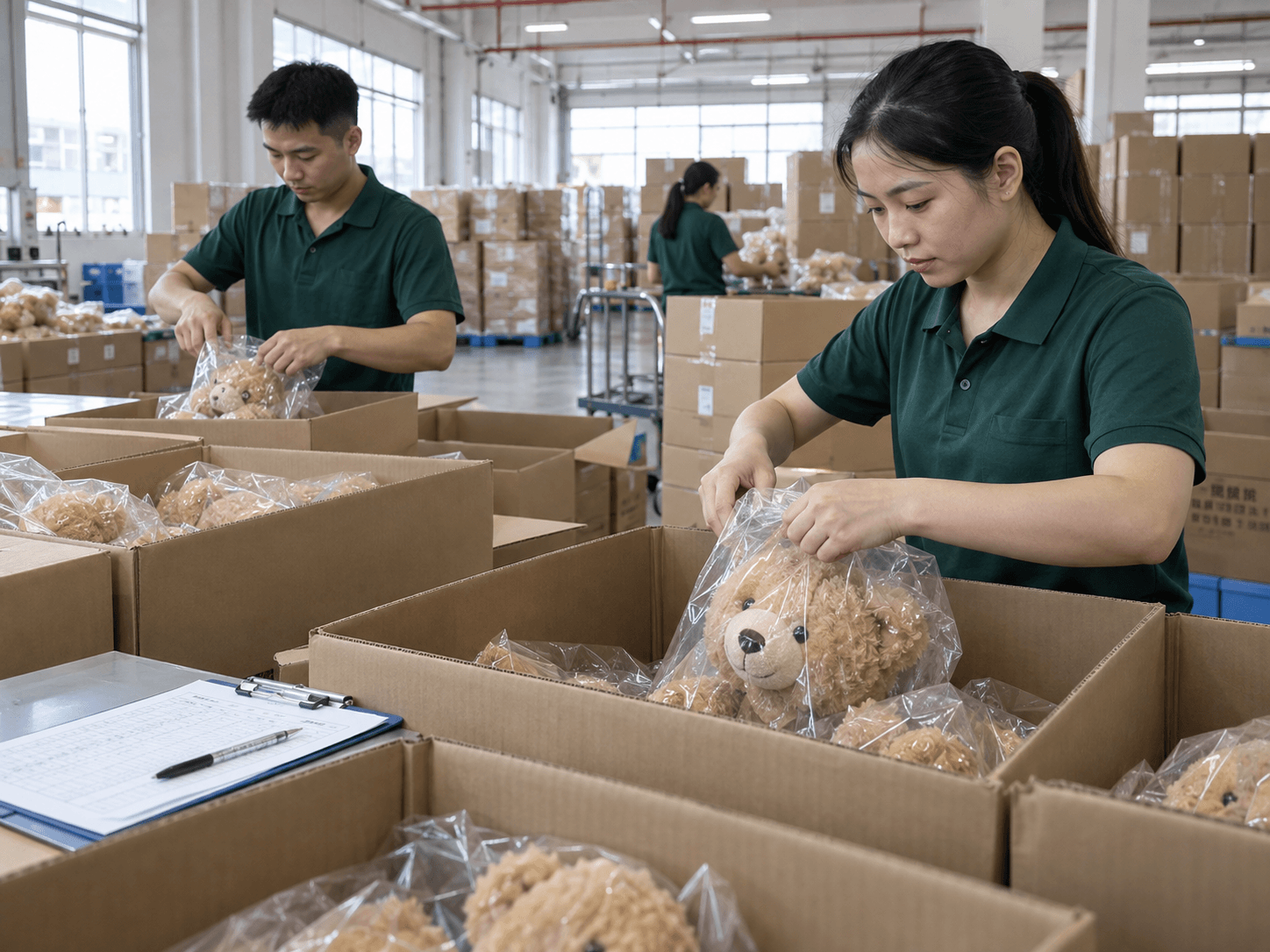
For a closer look at our production environment, visit our Shenzhen plush factory, review our approach to quality checkpoints, or explore custom plush product directions. For market-specific guidance, consult the current information from the U.S. Consumer Product Safety Commission and the European Commission where relevant to your product.
Frequently asked questions
What should I provide when asking about plush toy quality control?
Share artwork or reference images, intended application, target size, estimated quantity, destination market, packaging direction and delivery goal. A factory can then identify what is confirmed, what needs a sample and what assumptions affect the quotation or timeline.
Does an approved sample remove the need for inspection?
No. The approved sample provides the reference for bulk production, while first-piece, in-process and shipment inspection help verify that the finished goods and packing remain aligned with that reference. Each checkpoint has a different role.
Can a supplier confirm compliance for every market?
A supplier can provide product information, samples and production support, but the responsible market operator should determine applicable requirements, testing and documentation for the specific product, age grade and destination market.
READY WHEN YOU ARE
Ready to turn a plush idea into an approval-ready project?
Share your customer requirements and desired delivery date with Pufza for a focused sampling and production conversation.
Send Your Requirements →