
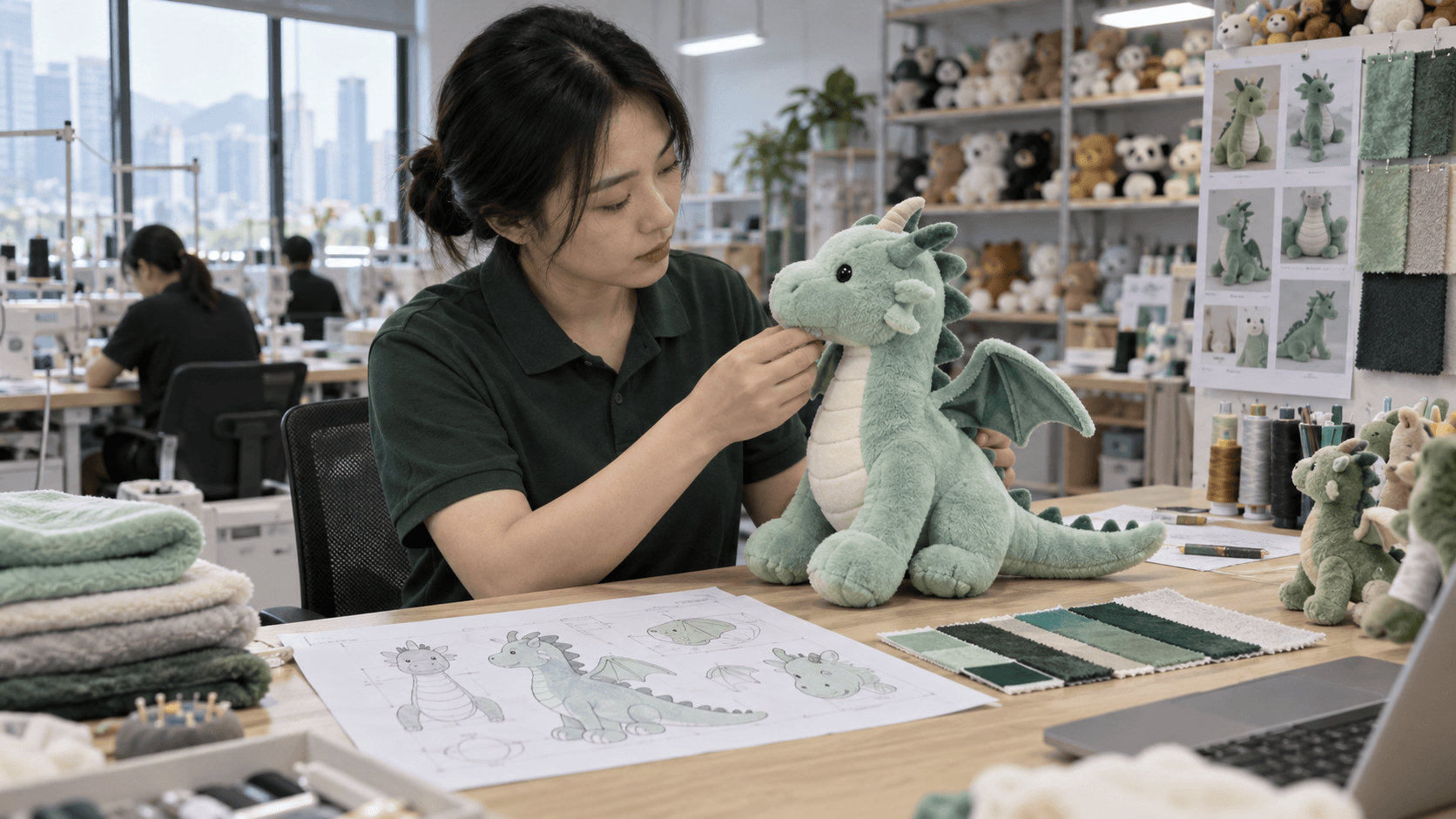
Choosing a plush toy manufacturer is less about finding the lowest initial quote and more about finding a production partner that can translate your design into a repeatable product. A clear process reduces late changes, protects your target quality level and makes decisions easier when your team is sourcing from overseas.
For custom plush projects, we find that the most useful early conversations cover the character shape, fabric hand feel, embroidery or print details, safety expectations, packaging and intended order quantity. Those details create a shared reference before sample development begins.
1. Start with a product brief a factory can act on
A manufacturer can give more useful feedback when the brief contains more than a reference image. Include the intended size, preferred materials, colour references, target market, packaging concept and launch date. If a detail is non-negotiable—such as an embroidered face, a removable accessory or a particular fabric texture—mark it clearly.
What can stay flexible?
Some design choices should remain open until the first sample is in hand. Plush density, seam placement and the behaviour of long-pile fabrics can affect both appearance and feel. A good sample review turns those practical findings into clear revisions instead of assumptions.
2. Evaluate the sample, not only the product rendering
A concept drawing establishes direction; a physical sample shows how the design actually performs. During a sample review, look at symmetry, filling consistency, embroidery edges, component attachment and how the product sits when photographed or displayed. Ask for close images of the areas where materials meet and where features carry the most visual weight.
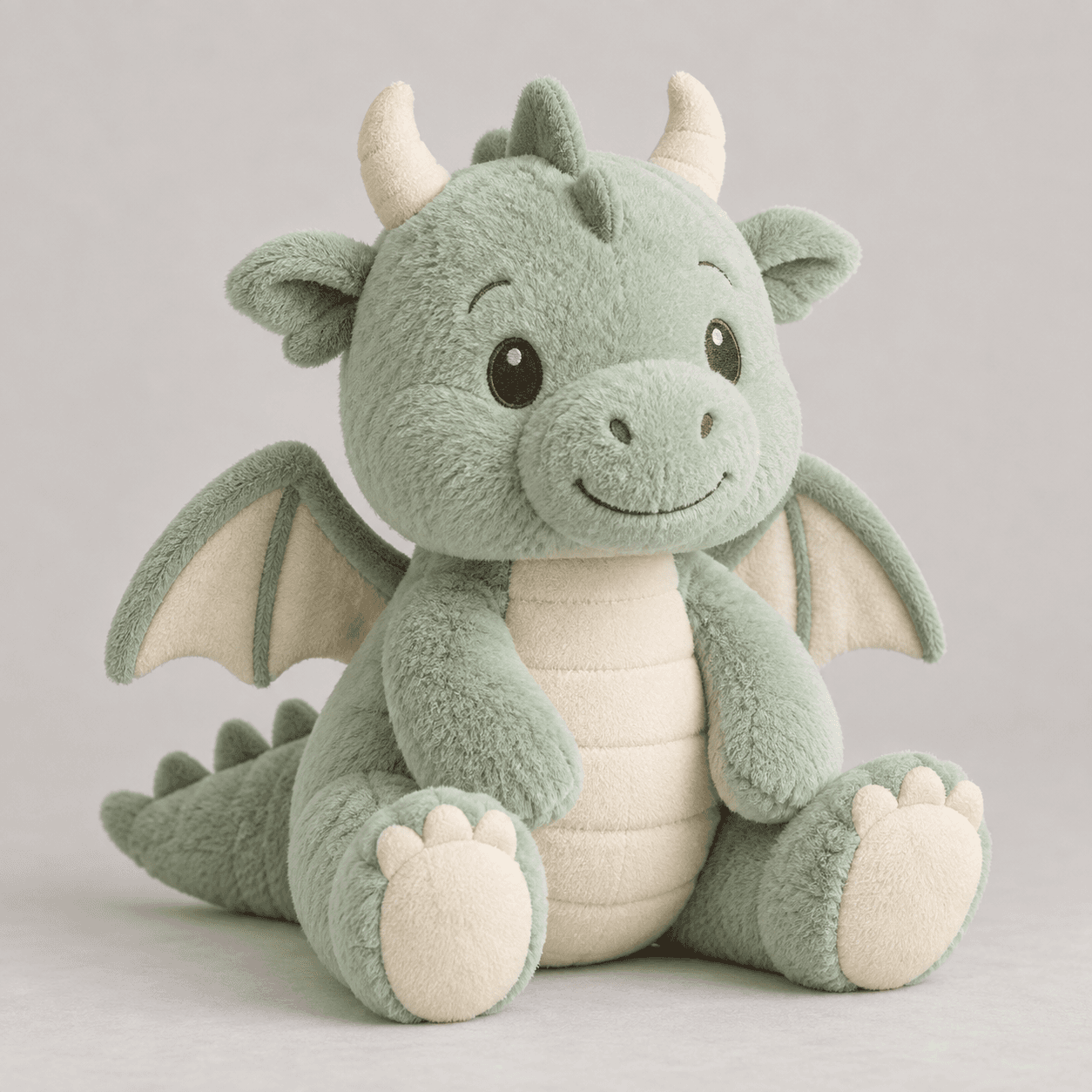
Sample review should focus on the visual details buyers will notice first.
For a licensed character, a retail collection or a promotional giveaway, the approval criteria may differ. The important point is to record the chosen version, the revised measurements and the approved materials before bulk production. That becomes a practical reference for production and inspection.
WORKING ON A PLUSH IDEA?
Turn your references into a sample plan.
Send your artwork, target quantity and requirements. We will help you identify the information needed for a more useful quotation.
Discuss your project →3. Look for visible production checkpoints
Remote sourcing works best when a buyer knows what will be checked and when. Rather than relying on a final update alone, ask how the factory handles material confirmation, pre-production review, in-process checks and shipment inspection. The answers should be practical and connected to your product requirements.
| Checkpoint | What it helps confirm | Buyer's input |
|---|---|---|
| Material review | Fabric, trims and colour direction align with the approved sample. | Confirm key material expectations. |
| Pre-production review | Patterns, artwork placement and packing details are understood. | Approve the agreed product reference. |
| In-process check | Stitching, filling and appearance are staying consistent. | Raise any priority details early. |
| Shipment inspection | Finished goods and packing are ready for handover. | Confirm inspection focus and carton requirements. |
See how our Shenzhen factory workflow connects product development, production and packing, or review our approach to quality checkpoints before building your supplier shortlist.
4. Questions to ask before placing an order
- Which parts of this design need a pattern or material test before approval?
- What sample feedback will be most useful to provide in writing?
- How will production and packing requirements be documented?
- When will the product and cartons be checked before shipment?
These questions are not a replacement for a detailed specification. They are a way to learn whether the supplier has a working method for moving a custom product from concept to finished goods.
Frequently asked questions
What should I prepare for a custom plush toy quotation?
Provide reference artwork, approximate size, expected quantity, target market, material preferences and packing needs. A target delivery date is also helpful for planning the sample and production conversation.
Why is a pre-production sample useful?
It creates a shared reference for material, shape, details and construction before larger-scale production begins. It also makes the final inspection focus clearer.
Can a manufacturer help refine a product concept?
Yes. A production-minded discussion can identify where fabric behaviour, construction or component placement may need testing. The final product requirements should still be confirmed by the buyer.
Choose clarity over assumptions
The right manufacturer helps make a custom plush project more predictable: requirements are recorded, samples are reviewed with purpose and production checkpoints are visible. Start with a clear brief, ask practical questions and use each approval step to protect the product experience you want your customer to receive.
READY WHEN YOU ARE
Share your plush toy requirements.
We can start with your artwork, product references or a simple project outline.
Get a quote →