
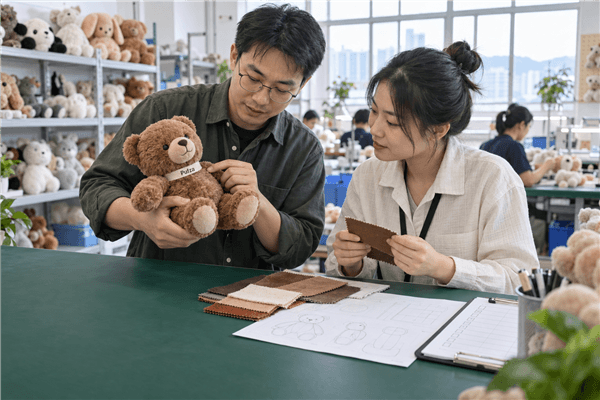
A custom plush toy manufacturer in China should be evaluated as a product-development and supply partner, not only as a source of a low unit price. For an OEM program, the strongest fit is a factory that can turn an approved brief into a repeatable sample, communicate material and production choices clearly, and document the checks that protect your customer requirements through shipment.
This guide groups six closely related B2B search terms—custom plush toy manufacturer, custom plush toy factory, custom plush toy supplier, plush toy manufacturer China, OEM plush toys, and custom stuffed animal manufacturer—into one practical decision path. It is written for brands, retailers, licensing teams, agencies and creators preparing a real product program rather than a one-off consumer purchase.
1. The short answer: choose evidence, not a factory claim
What a capable OEM partner should make clear early
A credible custom plush toy manufacturer should be able to discuss your design, intended customer, destination market, target size, materials, decorations, quantity, packaging and desired delivery date in enough detail to identify assumptions before quotation. A portfolio is useful, but it cannot replace a project-specific sample route and written specification.
The practical question is not simply whether a factory makes plush toys. It is whether the factory can make your particular plush toy consistently. A character with a simple round shape, a dense embroidered face, a removable garment, a long-pile fabric and a retail gift box can each create different development and quality-control needs.
Ask a supplier to separate what is known from what still needs confirmation. For example, an early estimate can be useful when it identifies the assumed size, fabric, decoration, pack and quantity. A quote becomes less dependable when those assumptions are hidden behind a single price line.
Pufza works from an 8,000 m² Shenzhen facility that connects product development, sewing, finishing, inspection and packing. That structure is valuable only when it is applied to a clear customer brief, a physical approval reference and a disciplined review path.
2. Why manufacturer, factory and supplier searches need different answers
The words overlap, but the buyer’s responsibility does not
A search for a custom plush toy manufacturer normally signals that the buyer needs production capability, design translation and bulk-order reliability. A search for a custom plush toy factory can signal a need for transparency about development and production steps. A custom plush toy supplier search may also include catalog, sourcing, export and service expectations.
For OEM plush toys, the buyer should define who owns the artwork, who approves the sample, which market the product will enter, and who is responsible for labels, packaging and test preparation. These choices affect the product route before a sewing line starts work.
A custom stuffed animal manufacturer should not promise a generic result from a reference image alone. The better conversation is about the intended outcome: how the character should look and feel, where it will be sold, what the recipient will do with it, and which product details cannot change without approval.
This is why six related keywords belong in one guide. They describe a single commercial journey—from identifying a factory to approving an OEM production plan—rather than six unrelated pages competing for the same buyer.
3. Evaluate relevant factory capability before requesting a final quote
Ask for proof that matches your product category
Start with products that resemble your project in construction, not merely in color or theme. A factory may have strong experience in basic animal plush while your project needs an articulated mascot, small keychain format, tailored clothing, complex appliqué or tightly controlled facial embroidery. Relevant samples reveal more than a large but unrelated gallery.
Look at how the factory explains its development sequence. A capable team can describe pattern work, material confirmation, embroidery or print review, sewing, filling, finishing, inspection and packing as connected steps. The goal is not to hear a long process list; it is to know where your design will be checked before a variation becomes expensive to correct.
Communication quality matters because custom plush development contains visual judgments. A useful supplier asks questions about artwork version, target dimensions, colors, fabric hand feel, trim, labels, packaging, estimated quantity and market. That is a sign of preparation, not unnecessary delay.
For a first order, request current sample photos or a video of relevant workmanship, then use your own sample review to verify the project. Do not treat another customer’s design or a social-media image as proof that your approved product will automatically match it.
LET'S MAKE THE NEXT STEP CLEAR
Turn your artwork into a factory-ready plush sample.
Send your design direction, target size, quantity, market and pack requirements. Pufza will help identify the information needed for an accurate OEM discussion.
Send Your Requirements →4. Prepare an RFQ that a plush toy factory can answer accurately
A specific brief protects both the quote and the sample
Your request for quotation should begin with the artwork or a clear product direction and identify the intended customer, selling channel, destination market, target size, estimated quantity, desired in-hand date and packaging requirement. If a detail is undecided, label it as an assumption rather than allowing it to disappear from the discussion.
Add reference images for mood, proportions, color direction or surface feel, but state which details are original requirements and which are only inspiration. A responsible manufacturer should help you develop original artwork and should not treat a competitor’s character as a production specification.
Describe the customer requirements behind the design. A museum-shop animal, an event giveaway, a retail character, a creator’s merchandise item and a corporate mascot can share a plush format while needing very different price positions, pack formats and delivery plans.
Ask the supplier to return the quote with its specification basis: size, outer fabric, filling, decoration, accessories, labels, individual pack, master carton, MOQ, sampling route, estimated timeline and trade terms. This makes quotes comparable across factories and keeps later revisions visible.
5. Use sampling to test the product, not merely approve a photograph
The sample converts a concept into a controlled reference
A custom plush sample is where an artwork becomes a three-dimensional product. Review silhouette, balance, fabric pile, color, seam placement, facial expression, embroidery density, appliqué edges, stuffing level, labels and garments against the written brief. A clean sample photograph is helpful, but handling and close views often reveal details that a distant image cannot.
Combine feedback into one revision list. Identify what must change, what is accepted, what is still under review and which source file controls the next revision. Scattered comments from separate channels can create conflicting instructions and make it difficult for both buyer and factory to identify the current approved version.
When the sample is approved, preserve the product information that matters: dated photos, measurements, fabric and color references, embroidery file or placement, label copy, packing direction and critical appearance points. This package becomes the practical basis for bulk production and inspection.
The approved sample is sometimes called a golden sample. It does not remove the need for judgment during bulk production, but it gives everyone a defined reference. Without it, terms such as soft, cute, premium or accurate remain open to interpretation.
6. Plan factory testing, safety preparation and shipment inspection together
Quality is strongest when it is built into the route
Quality control should begin before final inspection. Confirm key materials and construction at sample stage, review the first production pieces, monitor the important visual and assembly points during production, and check finished goods and packing before shipment. The exact plan should reflect your product, market and customer requirements.
For a toy intended for a specific market, identify applicable safety and compliance requirements with appropriate professional and laboratory support. A manufacturer can help organize product information and samples, but it should not replace the buyer’s responsibility to confirm the destination-market route and the claims made to customers.
Write down practical inspection points: finished measurements, fabric appearance, fill consistency, embroidery placement, attachments, label wording, color approval, carton marks, pack quantity and damage protection. Shipment inspection is more useful when it compares completed goods against an agreed standard instead of relying on a broad request for high quality.
Ask how nonconformities are recorded and handled. A responsible plan states who reviews an issue, how a correction is verified and when the buyer is informed. Clear escalation protects a launch date better than discovering a disagreement only after cartons have left the factory.
7. Understand MOQ, pricing and the difference between a cheap quote and a useful quote
The product specification drives the commercial answer
MOQ is connected to more than a factory preference. Material sourcing, cutting efficiency, embroidery setup, custom labels, packaging and the economics of a design that may be unique to your project can all affect the viable quantity. Ask what specifically drives the MOQ and which elements change it.
A custom plush toy price can change with size, fabric type, panel count, filling, embroidery, print, appliqué, accessories, clothing, individual packaging, carton configuration, quantity and delivery route. Two quotes with the same product name can represent different finished products, so compare the details before comparing the number.
If your budget is fixed, share it honestly alongside the must-have features. A good factory can show which alternatives may reduce cost or improve manufacturability, such as a different size, fabric grade, decoration method or packaging format. Those alternatives should be explained, not substituted silently.
For a launch program, calculate beyond the factory unit price. Include sample investment, testing or compliance work where applicable, packaging, freight, duties, storage, fulfillment, marketing and expected returns. This turns a factory quote into a decision that reflects the full commercial product.
8. Build a realistic lead-time, packaging and shipment plan
A delivery date is a sequence of approvals and handoffs
Lead time begins with artwork readiness, not when the buyer first asks for a quote. Sampling, revisions, material confirmation, bulk production, factory testing, inspection, packing, freight booking and destination delivery each need time. Ask for milestones and identify which buyer approvals are required to keep the plan moving.
Packaging should be reviewed as part of the product. It affects retail display, e-commerce presentation, gift readiness, carton efficiency, moisture protection and the product’s condition after transport. Pack an approved sample where practical, then open it and assess shape recovery, surface condition, labels and overall presentation.
A shipment plan should state individual pack, master-carton dimensions, pieces per carton, carton marks, pallet or loading expectations, inspection timing and the ready-to-ship date. This helps a freight partner quote the correct route and prevents last-minute packing assumptions from changing the cost basis.
Do not choose the most compressed pack simply because it looks efficient. If compression distorts the product, damages the pile or creates a poor first impression, the resulting rework or customer-service cost can be greater than the freight saving.
9. Supplier decision checklist for a custom plush OEM program
Use the same evidence for every candidate factory
Before selecting a custom plush toy supplier, compare relevant product samples, communication quality, the written quote basis, sample route, material confirmation, expected MOQ, production milestones, quality checkpoints, packing plan, export support and the process for resolving issues. Keep notes in one comparison sheet rather than relying on memory.
A strong candidate does not need to promise every request immediately. It should be able to explain what can be confirmed now, what requires a sample or market review, and what information it needs from you. Specific questions generally create a more dependable result than an instant but vague yes.
Pufza can review an OEM plush enquiry when you share artwork or concept direction, expected size, estimated quantity, destination market, packaging needs, target date and customer requirements. We can then identify the missing inputs needed for a useful sampling and production discussion.
The right factory relationship is one that makes your decisions clearer. When materials, visual details, costs, timing, factory testing and shipment inspection are documented together, a custom plush program is easier to manage from initial artwork through customer delivery.
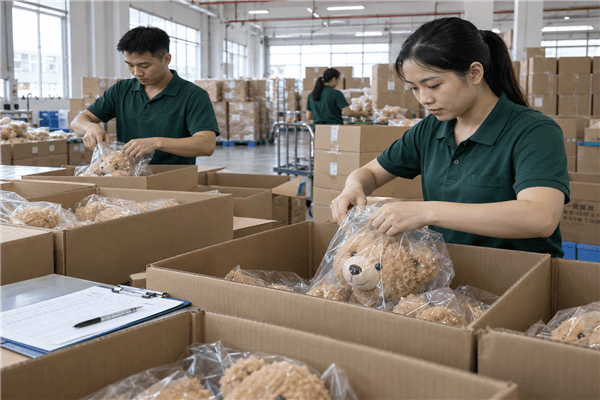
For a closer look at our production environment, visit our Shenzhen plush factory, review our approach to quality checkpoints, or explore custom plush product directions. For market-specific guidance, consult the current information from the U.S. Consumer Product Safety Commission and the European Commission where relevant to your product.
Authoritative resources
Use current, product-specific guidance when preparing a toy for a destination market.
Frequently asked questions
What should I send to a custom plush toy manufacturer for an initial quote?
Send the artwork or product direction, intended customer, target size, estimated quantity, destination market, packaging needs and desired delivery date. Include reference images only as guidance, explain which details are essential, and ask the factory to state its quote assumptions in writing.
How do I compare two custom plush toy factory quotes?
Compare the quoted specification, not only the unit price. Confirm size, outer fabric, filling, decoration, accessories, labels, packaging, MOQ, sample route, lead-time assumptions, inspection scope and shipping terms. If one item is unclear, request clarification before treating two offers as equivalent.
What is the role of a golden sample in custom plush production?
A golden sample is the approved physical and documented reference for bulk production. It records the accepted visual, material, measurement, decoration, label and packing decisions so factory testing and shipment inspection have a shared standard to compare against.
Can Pufza manufacture custom stuffed animals for international brands?
Pufza develops OEM and ODM custom plush programs for brands, retailers and organizations. Send your product direction, market, quantity, packaging requirements and delivery target so the Shenzhen team can review feasibility and outline an appropriate sampling route.
READY WHEN YOU ARE
Need a custom plush toy manufacturer in China?
Bring your product brief and delivery target to Pufza for a focused sampling, production and quality-planning conversation.
Get a Quote →